





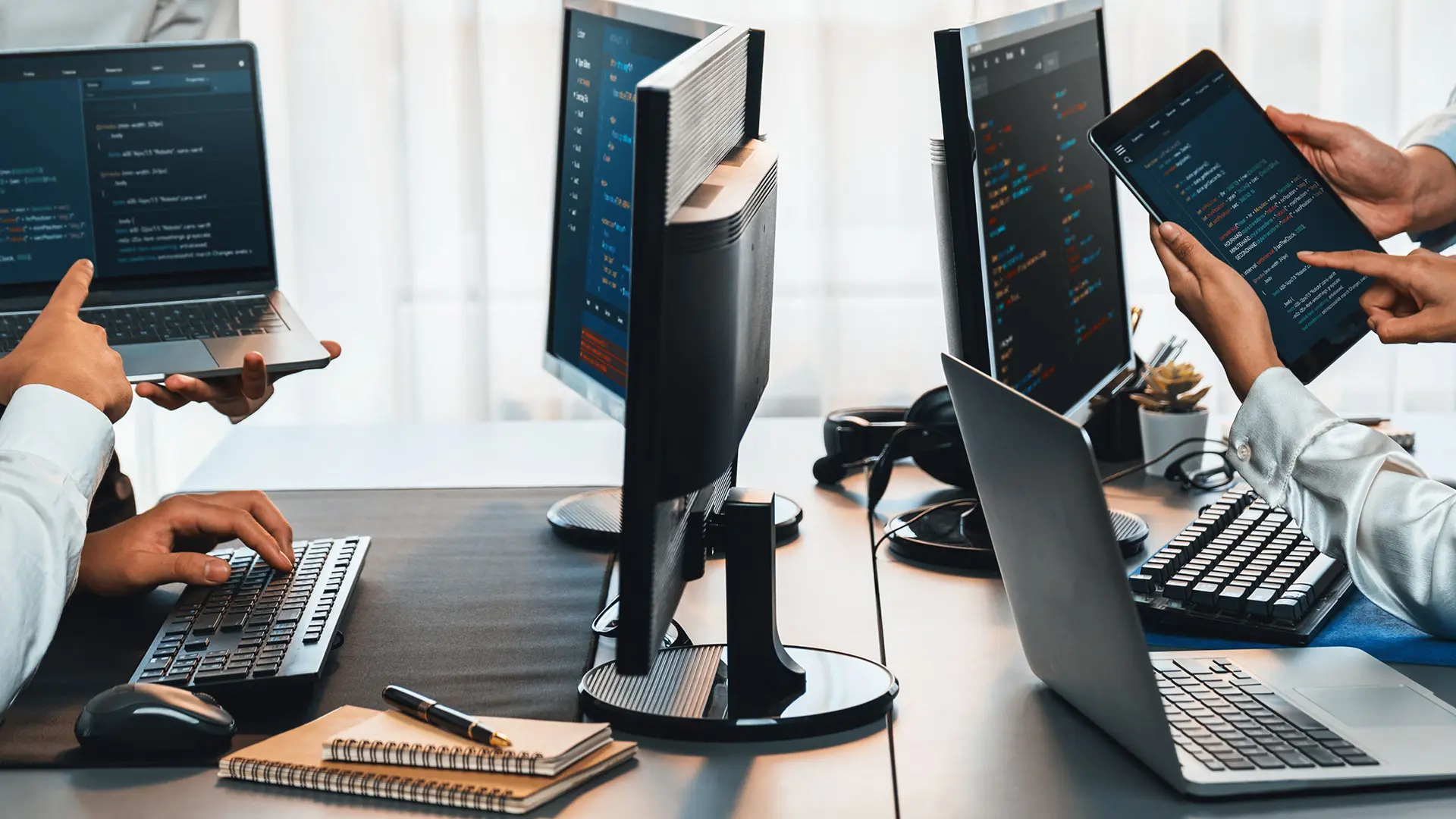
The biggest challenge that many growing businesses face is finding the time and resources to manage new technology. The internal IT team often has to keep the business secure while supporting employees and maintaining its technology. It must also keep up with compliance and longer-term IT needs.
They are often expected to manage them with limited staff and budgets. When these responsibilities grow, even routine tasks can take valuable time. Time that could be spent on initiatives critical to the business.
Here is where co-managed IT offers an advantage. Your internal IT team receives additional expertise, resources, and operational support when needed. If you’re dealing with increases in workloads, skill gaps, or technology requirements, a co-managed approach helps. Its teams stay productive without increasing headcount.
We’ll explore how co-managed IT support works, what the signs are that your organization could benefit, and how it enables IT to achieve more, not with additional resources but with what they already have.
What Is Co-Managed IT and Why More IT Teams Are Choosing It
Co-managed IT is a partnership between your organization’s internal team and an external IT services provider. The provider works to fill skill gaps, handle routine tasks, and offer specialist support when needed.
The areas where they provide support depend on the requirements of your business. Some organizations rely on them to fortify cybersecurity or manage cloud services, others to provide support after hours or monitor networks. Some use the providers to assist with large-scale technology projects.
While technology demands have continued to grow, the challenge is finding experienced IT professionals. With these growing demands, internal teams are expected to manage infrastructure that grows more complex, while maintaining security and supporting users as well.
An external provider reduces the pressure on internal IT teams by extending the team’s capabilities, which is why more IT teams are adopting this model.
What this means for business is a more resilient IT function. Internal staff can focus on projects that drive business value. The external partner, meanwhile, keeps systems secure, reliable, and running efficiently.
How Co-Managed IT Support Helps IT Teams Do More with Less
While we understand why businesses are opting for co-managed, it is important to understand how they support the internal team. The daily responsibilities that an internal IT staff has to deal with are:
- Resolving support tickets
- Monitoring systems
- Applying security patches
- Responding to any incidents that may arise
These take priority over projects that improve business processes, since they have to be dealt with immediately.
With co-managed support, the daily workload can be shared with your provider. This deals with the challenge of a burdened internal team.
An external IT partner can handle routine operations, give specialist expertise, and step in when demands increase. This frees the internal team to focus on strategic initiatives like
- Cloud Adoption
- Cybersecurity Planning
- Infrastructure modernization
- Digital transformation
A co-managed model offers flexibility. Support can be scaled up for major projects, seasonal demands, and technology rollouts. As demands increase, instead of the internal team getting more responsibilities, you can rely on your IT partner.
In this model, the internal team remains in control of technology decisions. But they also gain access to additional skills and resources when needed.
This approach reflects a broader shift in IT leadership. Leaders are balancing growing operational demands with increasing expectations to drive business value and innovation. Co-managed IT support lets organizations meet both demands.
The provider strengthens the internal capabilities of your company but doesn’t increase the headcount significantly.
Co-Managed IT Services That Strengthen Security and Performance
Cloud applications, connected devices, and remote working environments are services that businesses are adopting. A secure and reliable IT infrastructure in such a scenario becomes demanding. Co-managed IT support can help with daily responsibilities; it can play a key role in security as well.
The scope of the support varies. Some organizations use co-managed IT services for 24/7 network monitoring, so that they can respond to any issues that may occur. Others use external specialists for the new services that businesses are adopting.
- Cybersecurity
- Cloud Management
- Backup and Disaster Recovery
- End protection
- Compliance support
These are areas where co-managed IT can play a key role, depending on the business needs. Sharing operational data allows the internal team to resolve issues quickly. The quick response reduces the risk of downtime and security gaps.
Co-managed IT improves overall system performance through proactive maintenance. Regular software updates, patch management, infrastructure monitoring, and performance optimization services help identify issues before they can affect users or disrupt your business.
The result: an IT environment that is more secure, resilient, and better equipped to support your business growth.
Co-Managed IT vs Traditional IT Support: Which Fits Your Business?
The choice between co-managed and traditional IT depends on how your business operates and the extent of internal IT expertise you have.
Traditional IT support is designed for businesses that outsource most or all of their IT operations. Co-managed IT is for organizations with an existing IT team that needs additional resources.
Co-Managed IT Support | Traditional IT Support |
Works alongside your internal IT team | Operates as your primary IT department |
Internal team retains control of IT strategy | Provider manages most IT operations |
Flexible support based on business needs | Fixed service scope based on the agreement |
Ideal for growing businesses with in-house IT staff | Suitable for businesses with limited or no internal IT team |
Provides specialist expertise for projects, security, and cloud services | Focuses on day-to-day IT management and user support |
Easily scales as workloads and business requirements change | Scaling services may require changes to the service agreement |
The right choice is based on your business IT needs. If you have an established IT team, the flexibility of a co-managed support will benefit you. For small organizations, traditional IT will benefit if you do not have a dedicated IT staff.
The right approach complements your team’s capabilities and will support your long-term business goals.
Building a Smarter IT Strategy with Co-Managed IT Support Services
According to Deloitte‘s 2026 Global Technology Leadership study, 79% of technology leaders say driving business outcomes is their top priority. This reflects a growing focus on resilience and long-term investment in technology.
To be part of this shift, take a closer look at your internal IT team. See where they deliver the greatest business value.
First, review where your IT staff’s resources are spent. If in a normal week, the daily responsibilities, such as routine support requests or maintenance, consume most of their time, strategic projects are likely to be delayed.
The next step is to identify which business activities require the in-house knowledge of your IT team. And which can be delegated. Some initiatives, like technology planning and stakeholder collaboration, are often best managed internally. A co-managed IT partner can handle daily operational tasks such as maintenance and monitoring.
The final step is to assess whether your current team can support your future business plans. They could be expanding to new locations. Or on the technological side, you want to have cloud migration, adopt AI-powered tools, or meet new compliance requirements. In our experience, that places additional demands on your team. Preplanning for these changes helps reduce disruption and avoid reactive hiring.
A co-managed IT model gives businesses the flexibility to strengthen security and also scale IT capabilities. At the same time, your internal team can stay focused on the initiatives that drive business impact.
Conclusion
Technologies continue to evolve, and IT teams are expected to support day-to-day operations as well as drive strategic initiatives. Achieving both with limited resources becomes increasingly difficult as time passes.
Co-managed IT support offers a practical way to bridge that gap. It complements your internal IT team by providing specialist expertise and additional capacity. This reduces operational pressure, strengthens security, and keeps critical projects progressing. It results in your IT functions being better equipped to adapt to your changing business needs.
If your IT team is occupied with maintaining systems rather than improving them, you may have to reassess how your resources are being used. The right co-managed IT strategy should fit your existing team and technology. That’s the approach Silverxis takes, working alongside internal IT teams to provide the expertise and flexibility needed as business and technology requirements evolve.
